How Microgrids Can Support Resilient EV Charging Sites
EV charging can become a large and time-sensitive site load. A microgrid may help a depot, campus, or critical facility coordinate utility power, onsite generation, stationary storage, and selected loads during normal operation and grid disruptions. Resilience does not come from adding individual components. It depends on a defined operating objective, a suitable electrical architecture, and controls that have been tested under failure conditions.
Define the resilience objective
Begin with the service that must continue. A public site may only need safe shutdown and communications during an outage. A fleet depot may need enough energy for emergency routes. A critical facility may prioritize building loads and allow charging only when generation and storage can support them. Record the required loads, duration, vehicle departure needs, and acceptable service reduction.
Separate short interruptions from extended outages. A battery can bridge a transfer or support a limited charging window, but sustained operation depends on stored energy, renewable output, dispatch rules, and any firm generation. Model energy over time, not only peak kilowatts.
Coordinate charging with distributed resources
The energy management system needs measurements for the grid connection, building loads, photovoltaic production, battery state of charge, and active charging sessions. It can then limit or schedule charging according to grid status, tariffs, renewable output, and vehicle priority. The design should identify which controller has final authority over the site import limit and how commands are exchanged with chargers and the battery system.
Bidirectional vehicles may provide power to a building or grid when both the vehicle and charging equipment support that function and local rules allow it. This capability should be treated as a specific engineered use case. Ordinary unidirectional chargers cannot provide backup power simply because they are connected to a microgrid.
Select compatible charging hardware
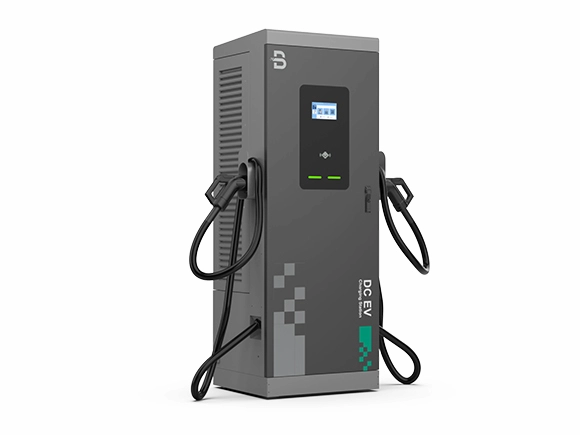
BENY charging solutions provide a relevant hardware reference when assessing how AC charging, DC fast charging, and energy storage can work within a site-level microgrid. Project teams should verify controllable power range, communications, metering, local fallback, restart behavior, and the exact interfaces available to the site controller.
Open protocols can help integrate chargers with a management platform, but the required functions still need project testing. Specify the protocol version, smart-charging messages, security method, and ownership of credentials. A microgrid should not depend on an untested cloud pathway for an action that protects the electrical system.
Test normal and islanded modes
Commission the site through realistic transitions. Test grid loss, transfer to islanded operation where permitted, limited solar output, low battery state of charge, communications failure, restoration of utility service, and reconnection of charging loads. Confirm that protection settings and grounding arrangements remain correct in every operating mode.
After commissioning, review event logs, battery cycling, curtailed charging, and missed vehicle targets. These records show whether the resilience objective is being met or whether control priorities need adjustment. A microgrid adds value when it supports a defined service with predictable behavior; it should not be justified by a general promise of energy independence.