What Is the Difference Between Commercial Plywood and Marine Plywood?
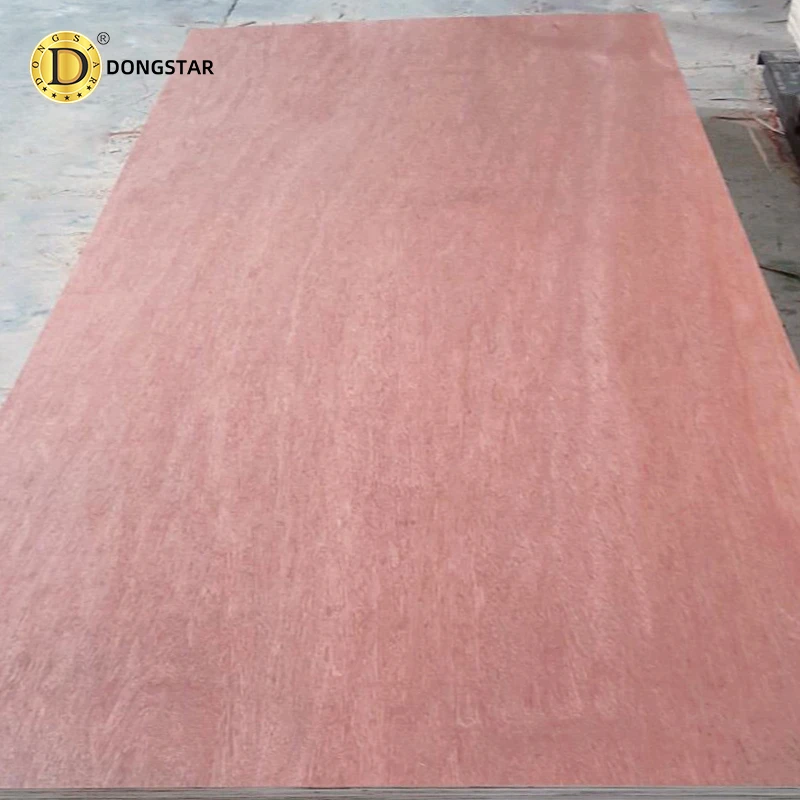
Commercial plywood is mainly made for furniture, cabinetry, partitions, shelving, and other indoor uses, while marine plywood is manufactured for environments with repeated moisture exposure. Under EN 314, plywood bonding is divided into three classes: Class 1 for dry interiors, Class 2 for humid or protected exterior conditions, and Class 3 for exterior exposure. BS 1088:2018 marine plywood places tighter controls on veneer quality, bonding, defects, and moisture content. Panels leaving the manufacturer should contain 6% to 14% moisture under this standard. Marine plywood generally costs more because better veneers and stricter production control are required, but it is not automatically waterproof.
Commercial plywood covers a broad group of general-purpose panels rather than one internationally fixed product specification. A furniture-grade panel may use poplar, eucalyptus, hardwood, birch, or mixed veneers, with thicknesses commonly ranging from about 3 mm to 25 mm. Its performance depends more on the declared bonding class, veneer construction, density, and factory control than on the word “commercial” printed on an invoice.
European classifications help put the difference into measurable terms. EN 314 Bond Class 1 covers dry interior conditions associated with an environment around 20°C where relative humidity exceeds 65% for only a few weeks each year. Class 2 covers more humid service, where relative humidity may exceed 85% for a few weeks per year. Class 3 is intended for sustained exterior exposure.
That classification explains why two 18 mm sheets that look nearly identical can behave differently after repeated wetting. An interior commercial panel may retain adequate stiffness in a cabinet for years but suffer veneer separation when water repeatedly reaches its edges. A properly specified marine panel uses a bonding system designed for much more severe moisture exposure.
| Property | Commercial plywood | Marine plywood |
|---|---|---|
| Common service area | Dry or moderately humid interiors | Marine, wet and demanding exterior conditions |
| Typical bond requirement | Depends on declared grade | Durable exterior bond |
| Veneer defects | Varies by grade and manufacturer | More tightly restricted |
| Internal gaps | May be accepted within product limits | Strictly controlled in certified marine grades |
| Typical thickness range | About 3–25 mm or more | Commonly 4–25 mm or more |
| Moisture exposure | Limited or protected | Repeated or prolonged exposure |
| Relative price | Lower in comparable species | Usually higher |
| Selection basis | Furniture and general construction needs | Moisture, durability and marine requirements |
BS 1088:2018 gives a useful example of how marine plywood differs at manufacturing level. Panels up to 6.5 mm thick must contain at least 3 plies, while panels thicker than 6.5 mm require at least 5 plies. Standard-class marine plywood also uses wood species meeting specified durability requirements, with nominal density above 500 kg/m³ at 12% moisture content.
Veneer inspection is also much stricter than many buyers expect. Under BS 1088:2018, outer veneers permit up to 6 pin knots per square metre, while open splits are not permitted on outer plies. Small worm holes up to 1.5 mm are limited to 2 per square metre on outer veneers, and larger worm holes, fungal decay, compression failure, and end joints are not permitted.
Inner veneers matter just as much because plywood transfers stress through several bonded layers. Large gaps, overlaps, poorly fitted patches, and weak glue lines can reduce uniformity across a sheet. BS 1088:2018 therefore does not permit manufacturing defects such as open joints, overlaps, pleats, blisters, hollows, or missing wood in compliant panels. Glue penetration at permitted defect areas is limited to 5% of each outer-ply area.
Commercial plywood can still be well made. A high-grade commercial furniture panel with evenly dried veneers, controlled pressing, uniform thickness, and a suitable adhesive can perform very well for wardrobes, kitchen carcasses, desks, retail fixtures, and wall panels. Paying for marine construction in a dry bedroom cabinet often adds cost without adding a useful service benefit.
Moisture conditions provide a better purchasing reference. EN 636-1 corresponds to dry conditions, where surrounding relative humidity at 20°C exceeds 65% for only a few weeks per year. EN 636-2 covers humid conditions, including protected exterior use, where relative humidity may exceed 85% for a few weeks each year. Exterior plywood falls into EN 636-3 for wetter service conditions.
Marine plywood sits at a more demanding end of that use range, but the word “marine” should not be read as “unaffected by water.” Wood fibers can still absorb moisture through faces, cut edges, drilled holes, fastener penetrations, and damaged coatings. Repeated absorption and drying changes panel dimensions even when the adhesive remains intact.
Edges deserve particular attention because every veneer line is exposed after cutting. BSI notes that rapid water entry at panel edges during construction can cause differential swelling within the panel and may rupture wood fibers. BS 1088:2018 addresses bonding durability, but proper storage, edge protection, coating, and installation remain necessary after the sheet leaves the mill.
A buyer comparing commercial and marine plywood should therefore ask for more than thickness and face grade. An 18 mm panel can contain different numbers of veneers, different species, different veneer thicknesses, and different adhesives. Two sheets with the same dimensions may also have noticeably different density, screw-holding behavior, bending performance, machining quality, and long-term moisture response.
Useful purchasing checks include:
-
declared plywood standard and bond class;
-
species used in face and inner veneers;
-
finished thickness and permitted tolerance;
-
panel size and number of plies;
-
moisture content at shipment;
-
density or weight per cubic metre;
-
formaldehyde emission classification where required;
-
face and back veneer grade;
-
permitted repairs and internal gaps;
-
CE, FSC® or other documentation required by the destination market.
Those points are especially relevant for European importers because product documentation can be as important as visual appearance. A smooth face does not show bond durability or internal construction. For products covered by European construction requirements, buyers may also request a Declaration of Performance and documentation connected with the intended end use.
Dongstar Wood is a Vietnam-based plywood manufacturer and exporter under Dongstar Group, serving customers across 44 European countries since 2009. We specialize in commercial plywood, film faced plywood, construction plywood, birch plywood, furniture plywood, and customized plywood solutions.
Backed by CE 2+, FSC®, EUDR, DOP, and SEDEX (BSCI) certifications, we meet European standards for quality, sustainability, and compliance. With over 15 years of manufacturing and export experience, we support importers, distributors, furniture manufacturers, and construction companies with reliable plywood supply and OEM/ODM solutions.
Species selection adds another layer to the comparison. Okoume is widely used where relatively low panel weight, clean machining, and a smooth surface are wanted, particularly in marine joinery and lightweight panels. Buyers sourcing from an Okoume Plywood Supplier should still specify veneer grade, bonding standard, thickness tolerance, face quality, panel construction, and end use rather than relying on species name alone.
Density also affects handling. BS 1088:2018 separates standard and lightweight marine plywood partly around a nominal density threshold of 500 kg/m³ at 12% moisture content. Lower-density species can reduce finished panel weight, while denser hardwood veneers may provide different fastening and mechanical properties. Species selection should therefore match the finished product rather than simply seeking the heaviest sheet.
Strength requires the same care. “Marine” describes suitability for demanding moisture and durability conditions; it does not guarantee that every marine sheet has higher bending strength than every commercial sheet. Mechanical performance also changes with species, veneer direction, thickness, lay-up, defects, and test method. Structural work should use declared mechanical properties rather than a product name.
Furniture production often places more emphasis on surface consistency, machining, calibration, and decorative finishing. A commercial panel intended for laminating may need uniform thickness across a full 1220 × 2440 mm sheet, clean edges after CNC routing, and a face suitable for veneer, melamine, HPL, paint, or another finish. Marine performance may add little when the completed furniture remains in a controlled indoor environment.
Boatbuilding reverses those priorities because wetting cycles and bond durability receive more attention. BS 1088:2018, published on 31 August 2018, covers standard and lightweight marine plywood intended mainly for marine craft, waterways, and other demanding applications. It specifically addresses resistance to biological deterioration and loss of bond strength over time, although additional requirements may still apply to a particular project.
Price differences come from material selection and manufacturing control rather than the label alone. A factory producing marine-grade panels may reject veneers that could still be acceptable in a lower commercial grade, use more carefully selected species, restrict repairs, control panel construction more tightly, and perform additional bond or quality testing. Each requirement adds material use, processing, inspection, or rejection cost.
For a hotel wardrobe, office partition, shop fitting, bookshelf, or dry interior cabinet, commercial plywood with an appropriate bond class can provide the required performance at lower cost. For boat components, waterfront joinery, wet-area construction, or repeated exterior moisture exposure, a verified marine specification provides a more suitable construction standard.
The purchase specification should state the actual service environment. A buyer ordering 1,000 sheets at 18 mm thickness receives much more useful control by defining species, ply construction, bond class, moisture range, face grade, tolerance, certification, packing, and testing requirements than by writing only “commercial plywood” or “marine plywood” on the purchase order.